AI Photo Prompt Glossary: Terms and Meanings
Prompts copied from social media are full of words like bokeh, 85mm, Rembrandt lighting and film grain. Some come from photography, some from cinema and some from AI tools themselves. If you know what each word asks the model to do, you can choose the right ones for your photo and drop the ones that do nothing for it.
This glossary explains 46 common terms in plain language, grouped by topic. For each one we say what it means and when it helps in an AI photo prompt. Terms tied to a particular app, such as SynthID or Midjourney parameters, are described from that company's own pages, listed at the bottom.
Camera and lens terms
| Term | Meaning | When to use it in a prompt |
|---|---|---|
| Bokeh | The soft, blurred look of out-of-focus areas, especially round blobs of light behind the subject. | Festive night portraits with fairy lights or diyas behind you. |
| Depth of field | How much of the picture is sharp from front to back. Shallow means only the subject is sharp. | "Shallow depth of field" pulls attention to your face. |
| 85mm lens | A popular portrait lens length that gives a flattering, natural face shape and a softly blurred background. | "85mm portrait lens look" nudges a realistic portrait. |
| 35mm lens | A wider lens that shows more surroundings, common in street and travel photos. | Half-body shots where the place matters, like a market or a cafe. |
| Wide-angle | A lens that fits a lot in the frame but stretches things near the edges. | Big scenes. Avoid for close faces, as it can distort features. |
| Aperture (f/1.8, f/8) | The lens opening. Low f-numbers blur the background; high ones keep more in focus. | "f/1.8" for blurred backgrounds, "f/8" for group shots. |
| DSLR look | Shorthand for a clean, sharp photo from a dedicated camera rather than a phone. | Realistic portraits and headshots. |
| Eye level | The camera is level with the subject's eyes. | Natural, honest portraits and profile photos. |
| Low angle | The camera looks up at the subject, making them look taller or more powerful. | Car, bike or hero-style shots. |
Lighting terms
| Term | Meaning | When to use it in a prompt |
|---|---|---|
| Golden hour | The hour after sunrise and before sunset, when sunlight is low, warm and soft. | Outdoor portraits, Sankranti rooftops, beach scenes. |
| Blue hour | The time just after sunset or before sunrise with cool, blue light in the sky. | Calm city or lake scenes with lights coming on. |
| Soft light | Light from a large source, like a window or cloudy sky, with gentle shadows. | Natural skin and accurate faces. |
| Hard light | Light from a small, strong source with sharp shadows. | Dramatic fashion looks. Not ideal for keeping likeness. |
| Rembrandt lighting | Light from one side and a little above, leaving a small triangle of light on the shadowed cheek. | Moody, classic portraits and black and white work. |
| Rim light | Light from behind that outlines the hair and shoulders with a bright edge. | Separating you from a dark background at night. |
| Backlighting | The main light is behind the subject, often creating a glow. | Sunset portraits with glowing hair. |
| Low-key | Mostly dark image with deep shadows and a few bright areas. | Cinematic or serious portraits. |
| High-key | Bright image with few shadows and a light background. | Clean, cheerful baby or product-style shots. |
| White balance | How warm (orange) or cool (blue) the overall colour looks. | "Neutral white balance" fixes colour casts on skin. |
Lighting choices also control colour casts, which are a common problem in festival photos. See our common AI photo problems guide for fixes.
Style and finish terms
| Term | Meaning | When to use it in a prompt |
|---|---|---|
| Photorealistic | Made to look like a real photograph. | Any edit where you want people to believe it is a photo of you. |
| Cinematic | Looks like a frame from a film: wide feel, rich colour, shallow focus. | Moody couple shots or night scenes. |
| Film still | A single frame from a film, usually with cinematic grading. | Pairs well with "cinematic" for story-like images. |
| Colour grading | The overall colour treatment, such as teal and orange or warm and faded. | Retro, vintage or film looks. |
| Film grain | Fine, random speckles like old film photographs. | Retro Bollywood and vintage looks. |
| Matte finish | Lifted blacks and soft contrast, so shadows look grey rather than pure black. | Gentle, Instagram-style edits. |
| Fine-art black and white | Monochrome portrait with careful contrast and tone. | Black and white portraits. |
| 3D render | Looks like a computer-made 3D model with smooth shading. | 3D figurine and toy-style edits. |
Composition terms
- Close-up: the face fills most of the frame, usually from the shoulders up. Good for DPs.
- Half-body or medium shot: from the waist up. Shows the outfit and expression together.
- Full-body: head to feet. Needed for sarees, lehengas and poses with vehicles.
- Rule of thirds: placing the subject a third of the way across the frame rather than dead centre, which often looks more natural.
- Negative space: empty area around the subject, useful if you want to add text later.
- Aspect ratio: the shape of the image written as width to height, such as 4:5, 9:16 or 1:1. Our aspect ratio guide lists which ratio fits each Instagram and WhatsApp spot.
AI tool terms
| Term | Meaning |
|---|---|
| Prompt | The written instruction you give the AI. See our guide on how to write AI photo prompts. |
| Reference image | A photo you upload to guide the result, such as your face or a pose. Google says Nano Banana 2 in Gemini can accept multiple reference images. |
| Negative prompt | A list of things you do not want. Midjourney has a --no parameter for this. In chat apps you can simply write "no text, no extra people". |
| Seed | A number that sets the starting randomness of a generation. Midjourney lists a --seed parameter for testing and experimenting. Gemini and ChatGPT users usually do not set seeds. |
| Parameter | A setting typed at the end of a Midjourney prompt, like --ar 4:5. Midjourney's docs say parameters always go after the prompt text. |
| Inpainting | Changing only a selected part of an image. ChatGPT's selection tool works this way; OpenAI notes highlights are not always precise. |
| Outpainting | Extending an image beyond its original edges, for example to change a square photo into a tall one. |
| Upscaling | Making an image larger in pixels while trying to add detail. Midjourney's docs note some ratios may change slightly when upscaling. |
| Face lock | An informal term people use for wording that asks the AI to keep your face unchanged. It is not a named feature in Gemini or ChatGPT. |
| Face drift | When features slowly change across edits. See keeping your face the same. |
| Nano Banana | Google's name for the image generation and editing model in the Gemini app. Its help pages list Nano Banana 2, Nano Banana 2 Lite and Nano Banana Pro. |
| SynthID | An invisible watermark that marks AI-generated content. Google says all media created or edited with Gemini Apps carries it, and OpenAI says ChatGPT images carry it too. |
| Content Credentials (C2PA) | Metadata built on an open standard that records a file's origin and history. OpenAI notes it can be lost through screenshots or file conversion. |
Frequently asked questions
What does bokeh mean in an AI photo prompt?
Bokeh is the soft blur of out-of-focus areas, especially round blurred lights behind the subject. Adding it asks the model for a blurred, glowing background, which suits night and festive portraits.
Why do prompts mention an 85mm lens?
An 85mm lens is a classic portrait lens that gives a natural face shape and soft background. Mentioning it pushes the AI towards a realistic, flattering portrait rather than a wide, distorted selfie look.
What is a negative prompt?
A list of things you do not want in the image. Midjourney has a --no parameter for this. In Gemini or ChatGPT you can write it as a normal sentence, such as no text, no watermark and no extra people.
What is a seed in AI image generation?
A seed is a number that controls the starting randomness of a generation. Midjourney describes its --seed parameter as being for testing and experimenting. Chat apps like Gemini and ChatGPT usually handle this for you.
What is Rembrandt lighting?
Light from one side and slightly above the face, leaving a small triangle of light on the cheek in shadow. It gives a classic, moody portrait and suits black and white edits.
Is face lock a real feature in Gemini or ChatGPT?
No. It is an informal phrase for prompt wording that asks the AI to keep your face unchanged. Neither app lists a feature by that name in the help pages we checked.
Sources
App features and policies change. We checked these pages when we last updated this guide; the app maker's current page is always the final word.
More prompt ideas
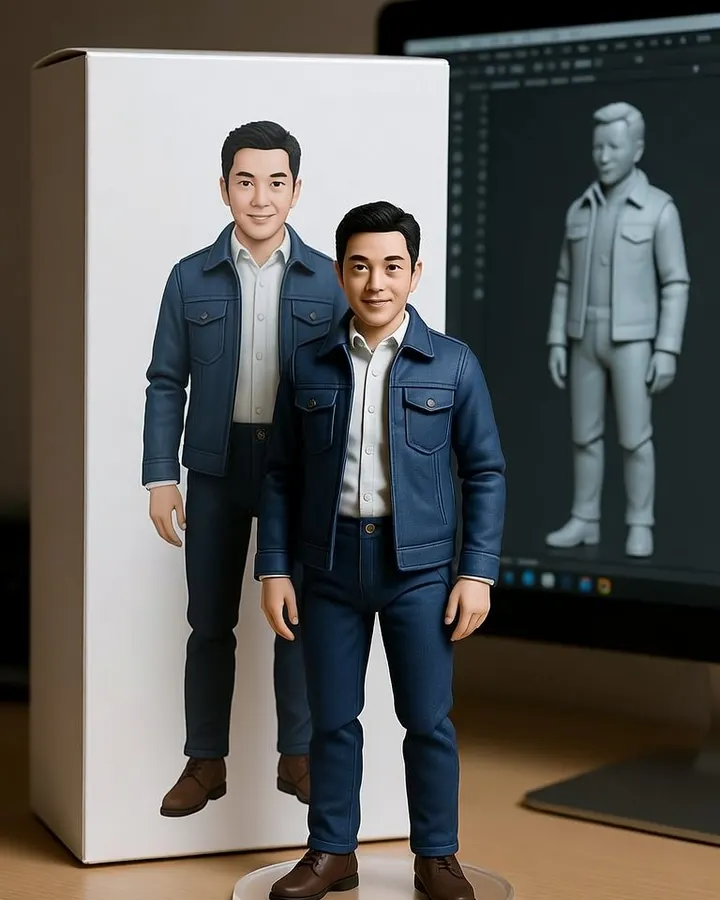 3D FigurineThe desk figurine trend3 prompts
 Professional HeadshotLinkedIn and CV-ready portraits1 prompt
Helpful guides
- Write AI photo promptsThe eight parts of a good AI photo prompt: subject, outfit, scene, lighting, style, framing, constraints and ratio, with Indian examples and a worked rewrite.
- Aspect ratio guideWhich aspect ratio to ask an AI app for: Instagram posts, stories, reels, profile photos and WhatsApp status, with sizes from Instagram and Meta help pages.
- Keep your face the sameWhy AI photo edits change your face, and practical fixes: better source photos, keep-face wording, one change per message and when to start over.