Chhath Puja AI Photo Prompts for the Ghat, Arghya and Thekua
Chhath Puja 2026 (Sandhya Arghya) is on Sunday, 15 November 2026, with sunset at 5:28 PM in New Delhi. Nahay Khay is on Friday, 13 November, Kharna on Saturday, 14 November, and Usha Arghya at sunrise (6:44 AM) on Monday, 16 November 2026. In 2027, Chhath Puja falls on Thursday, 4 November. All times are for New Delhi as per Drik Panchang; sunrise and sunset are earlier in Bihar and eastern Uttar Pradesh.
Chhath is the festival where a whole family walks to the river with baskets on their heads and waits for the sun. For people from Bihar, Jharkhand and eastern Uttar Pradesh, the ghat at sunset is the photo of the year, whether it is on the Ganga in Patna, the Yamuna in Delhi or a pond dug in a housing society in Mumbai. These prompts turn your own photo into those moments with any AI photo app that edits an uploaded picture.
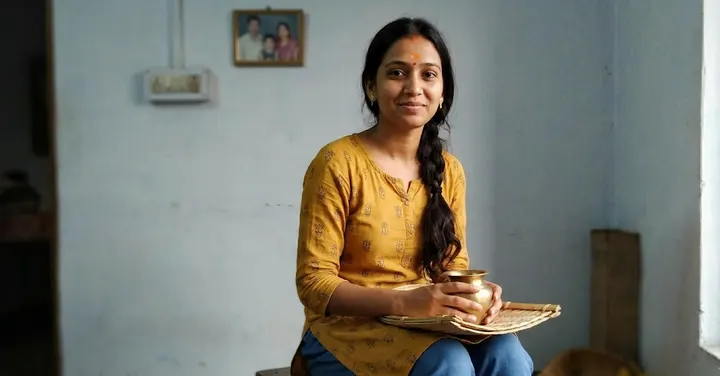 Before: plain selfie
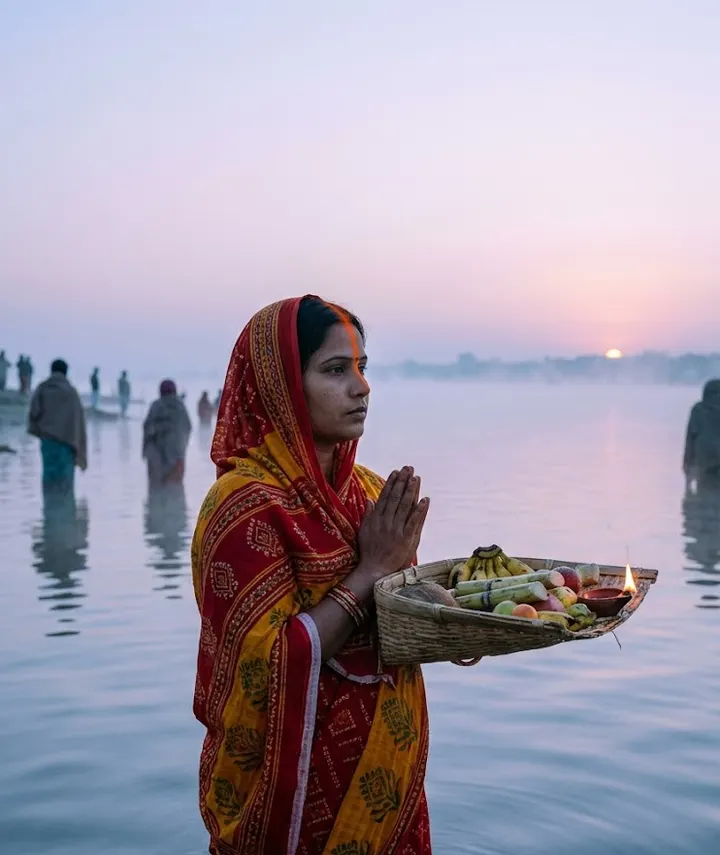 After: prompt 1
Jump to a prompt (5)
- 1. Open your AI photo app
- 2. Upload a clear photo of yourself
- 3. Paste a prompt and generate
Chhath Puja prompts to copy
Upload your own photo in the AI app first, then paste a prompt. Results differ on every try, so generate two or three versions and keep the best one. Want a different outfit or background? Use the prompt builder below.
1. Usha arghya at dawn in mist
Edit the uploaded photo into a quiet early-morning Chhath picture of the woman from the photo standing in the river before sunrise, palms joined, waiting for the first light. Thin mist sits on the water, the sky is pale pink and blue, and only the edge of the sun shows on the horizon. A soop with fruits and a lit diya rests on her palms. She wears a red and yellow saree draped over her head, with orange sindoor in her parting. Other devotees are faint silhouettes far behind. Medium shot. Keep her face and natural skin tone exactly as in the photo. Aspect ratio 4:5.
Why it works: The morning arghya ends the fast, and the mist and pale sky make it look different from the sunset photo. Asking for faint silhouettes keeps the ghat feeling real without the model adding strangers with clear faces next to you.
Make it yours: For a wider view, set 16:9 and ask for 'a row of diyas floating on the water near the steps', or keep the sun hidden and use only the pink sky.
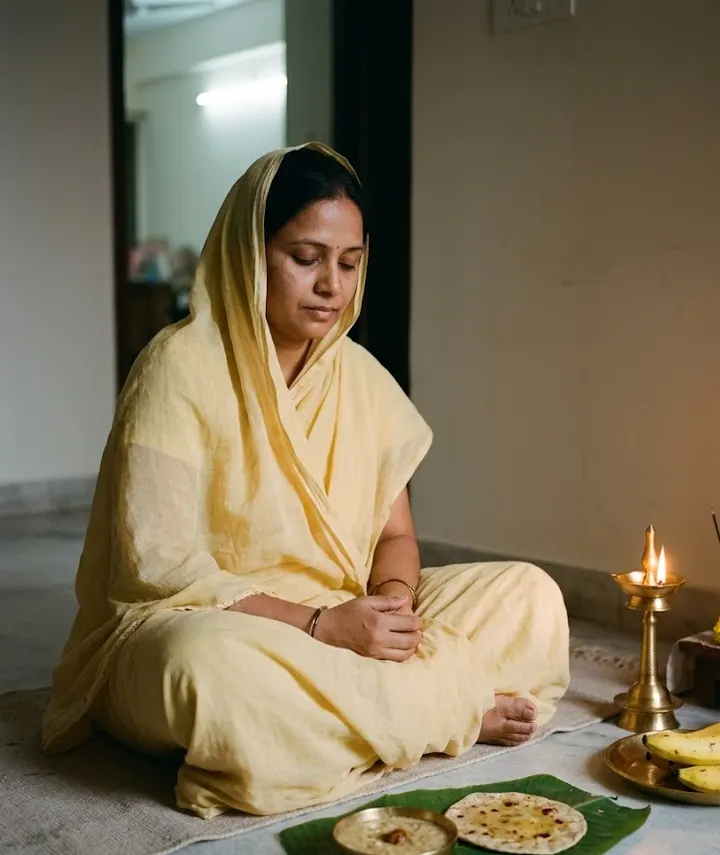
2. Kharna evening with gur kheer
Using the uploaded photo, create a calm Kharna evening picture of the woman from the photo sitting on a clean floor near a small puja corner, a banana leaf in front of her with jaggery rice kheer and a ghee-smeared roti. A brass lamp burns on the side, and a few ripe bananas sit on a brass plate. She wears a simple pale yellow saree with her head covered. The room is quiet and lit only by the lamp. Medium framing from a low angle, eyes lowered, peaceful expression. Keep her face, skin tone and age exactly as in the photo. Aspect ratio 4:5.
Why it works: Kharna is the evening when the vrati eats gur kheer and roti before the long fast, so the banana leaf and jaggery kheer tell the story clearly. The single lamp gives the hush of that evening rather than a party mood.
Make it yours: Ask for 'family members sitting in a row behind her, waiting to take the prasad' to show the sharing that follows, and widen to 16:9.
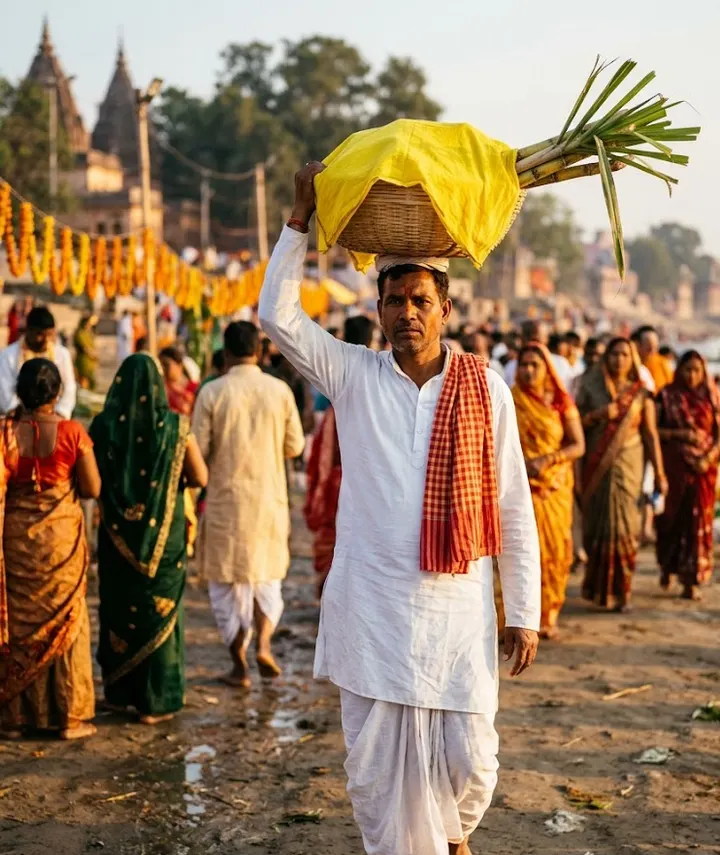
3. Carrying the daura to the ghat
Using the uploaded photo, create a realistic Chhath afternoon picture of the man from the photo walking barefoot towards the river ghat with a bamboo daura basket on his head, covered with a yellow cloth, steadying it with one hand. Sugarcane sticks stand up from the basket. He wears a white kurta and a dhoti, with a red and yellow gamchha on his shoulder. Behind him, a lane with marigold strings and families walking in the same direction, softly blurred. Warm late-afternoon sun from the side. Full-body framing. Keep his face and skin tone exactly as in the photo. Aspect ratio 4:5.
Why it works: Men of the house often carry the daura with the offerings to the ghat, and many young men want a Chhath photo that shows their part. Barefoot on the way is a detail people from Bihar will recognise.
Make it yours: Swap the dhoti for 'a yellow kurta and white pyjama', or ask for 'two brothers carrying the daura together' with a group photo upload.
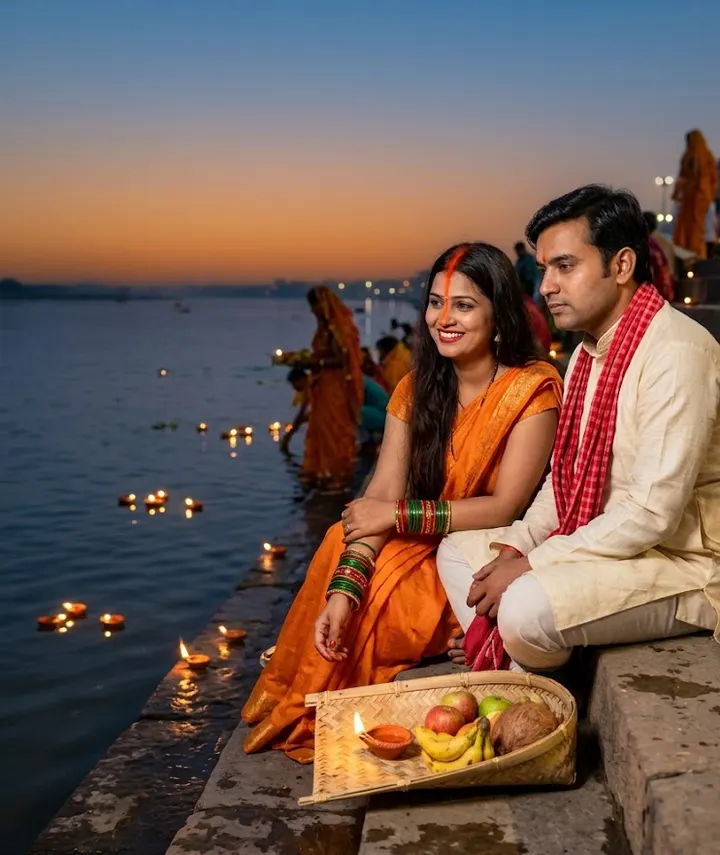
4. Couple on the ghat steps
Using the uploaded photo of the couple, create a Chhath evening picture of the couple sitting together on the stone steps of a river ghat after the sunset arghya. She wears an orange saree with long sindoor in her parting and green and red bangles; he wears a cream kurta and a red gamchha around his neck. A soop with fruits and a lit diya rests on the step between them. Diyas float on the water below, and the sky is deep orange fading to blue. Medium-wide framing from the side, both faces clear. Keep both faces and real heights exactly as in the photo. Aspect ratio 4:5.
Why it works: After the arghya, families sit on the steps and the light changes fast, which gives a softer couple photo than one taken during the ritual. Placing the soop between them keeps the festival in the frame.
Make it yours: For newlyweds on their first Chhath, add 'her bridal chooda and a new red saree'. For a reel cover, change the aspect ratio to 9:16.
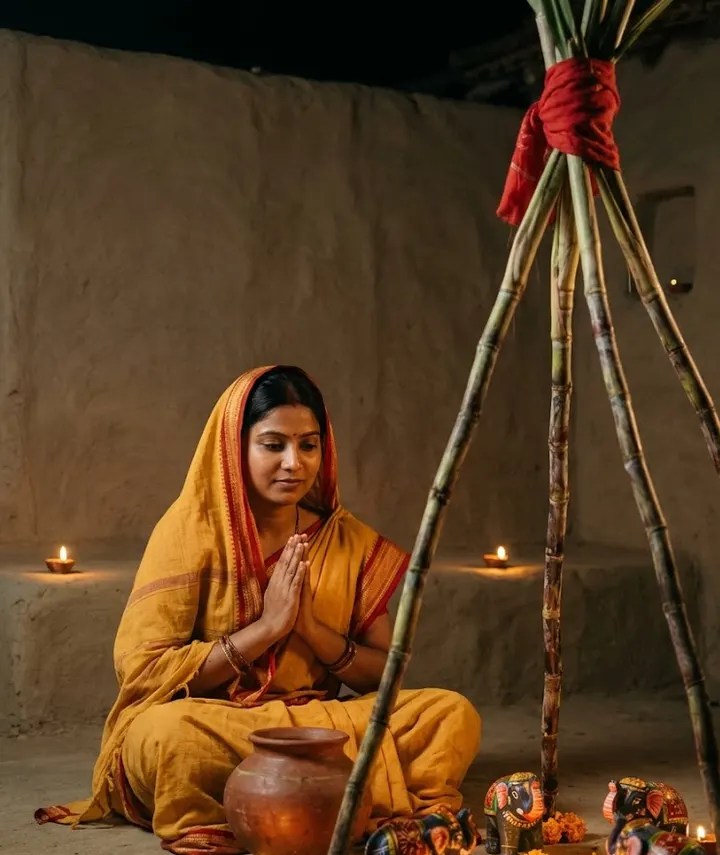
5. Kosi under the sugarcane canopy
Edit the uploaded photo into a night picture of the woman from the photo sitting beside the kosi in the courtyard, under a canopy of five sugarcane sticks tied together at the top with a red cloth. Clay elephants and earthen lamps are placed under the canopy, and the diyas glow on her face. She wears a yellow saree with a red border and her head covered, palms joined. Plain mud-plastered wall behind, a few marigolds on the ground. Medium shot at eye level, calm expression. Keep her face and skin tone exactly as in the photo. Aspect ratio 4:5.
Why it works: Kosi bharna, the sugarcane canopy with lamps, is kept in many homes after the evening arghya, and few prompt pages mention it. Describing how the canes are tied stops the model drawing a random hut.
Make it yours: Move the canopy to 'the ghat steps at night, with other families' kosi lamps in the distance', or set it to 1:1 for a profile picture.
About these prompts
You get five prompts: the dawn Usha arghya in mist, the Kharna evening with gur kheer, a man carrying the daura to the ghat, a couple on the ghat steps after the evening arghya, and the kosi under its sugarcane canopy. Each prompt names the real objects of Chhath, such as the bamboo soop, sugarcane, daura and the long orange sindoor, so the result looks like Chhath and not a general river picture. Every prompt also asks the app to keep your face as it is.
Chhath is a serious vrat for the women and men who keep it, so the prompts stay simple and respectful: no glamour poses in the water and no fake crowds pushing into the frame. Results vary between attempts, so make a few and keep the best one. If you are new to these edits, read which photo to upload first.
Build your own Chhath Puja prompt
Using the uploaded photo, create an ultra-realistic photograph of the woman from the photo, wearing an elegant silk saree with a gold border, styled neatly with simple jewellery. Style: shot on a professional DSLR with an 85mm lens, natural skin texture and sharp focus. Lighting: warm golden-hour sunlight. Use a natural, confident pose and a relaxed expression. Keep the face exactly as in the uploaded photo: same facial features, skin tone, hairstyle and age. Do not beautify, slim or change the identity. Correct hands and fingers, no text, no watermark, no extra people. Aspect ratio 4:5.
Open Gemini, attach your photo with the + button, paste the prompt and send. If the face drifts, reply "keep my face exactly as in the original photo" and regenerate.
The four days of Chhath 2026 and the photo for each
Chhath runs over four days, and each day has a different mood. The dates below are from Drik Panchang for New Delhi. In Patna, Ranchi or Varanasi the sun sets and rises earlier than in Delhi, so check a local panchang before you plan a ghat photo around the time.
| Day | Date (2026) | What happens | Prompt on this page |
|---|---|---|---|
| Nahay Khay | Friday, 13 November | Bath and a simple single meal | None yet |
| Kharna | Saturday, 14 November | Gur kheer and roti in the evening, then the fast | Kharna evening with gur kheer |
| Sandhya Arghya | Sunday, 15 November, sunset 5:28 PM (Delhi) | Evening offering to the setting sun at the ghat | Carrying the daura, Couple on the ghat steps, Kosi under the sugarcane canopy |
| Usha Arghya | Monday, 16 November, sunrise 6:44 AM (Delhi) | Morning offering, then the fast ends | Usha arghya at dawn in mist |
In 2027 the main day moves earlier: Nahay Khay is on 2 November, Kharna on 3 November and Chhath Puja (Sandhya Arghya) on Thursday, 4 November 2027, as per Drik Panchang.
Getting the sun, water and soop right
Sunset over water is easy for AI apps to make pretty and easy to get wrong. The common problems are a sun that is too big, a sun in the wrong place compared to the shadows, water that looks like a swimming pool and a soop that turns into a round plate.
- Say 'a bamboo soop, a flat winnowing tray with a curved back edge' so the model draws the woven shape and not a steel thali.
- Ask for 'the sun low above the far bank, light coming from behind her' so the shadows and the glow on the water point the same way.
- For the evening, write 'orange sunset over a wide river with a muddy bank'. For the morning, write 'pale dawn, thin mist on the water'. These two lines keep the two arghya photos clearly different.
- If the app adds too many people, reply 'keep everything, remove the people near her, leave only far silhouettes'.
- Wet saree fabric can come out clingy or revealing. Write 'saree wet only at the hem, modest drape' to keep the picture respectful.
Keeping Chhath photos respectful
For the vratis, Chhath is a strict fast kept with great care, and families are particular about purity. A respectful AI picture keeps the offerings neat, avoids putting shoes near the soop and does not turn the vrati into a fashion model. Plain cotton sarees, simple jewellery and calm expressions look more true to the festival than heavy makeup.
Keep diyas on the soop, on the steps or floating on the water, not near loose pallus or hair. If you share a photo of other family members, ask them first, and keep anyone who did not agree out of the picture. Do not use these prompts on photos of strangers you clicked at a public ghat. For more on the photo you start with, see keeping your face the same in AI photos, and for other festival looks see the Diwali prompts.
Frequently asked questions
When is Chhath Puja in 2026?
The main Chhath Puja day with the evening arghya is Sunday, 15 November 2026. Nahay Khay is on 13 November, Kharna on 14 November and the morning Usha Arghya on 16 November 2026, as per Drik Panchang for New Delhi.
Which photo should I upload for a Chhath AI picture?
Use a clear, well-lit photo where your face is facing the camera and not hidden by a pallu or sunglasses. A plain photo works better than one already taken at a crowded ghat, because the app can build the scene around you.
Why does the AI draw a plate instead of a soop?
The model does not always know the word soop. Describe it as a flat bamboo winnowing tray with a curved back edge, and list the fruits and thekua on it.
Can I make a Chhath photo for boys and men?
Yes. The prompt for carrying the daura to the ghat is written for men, and the couple prompt on the ghat steps includes a man in a cream kurta. Upload your own photo and keep the dhoti or kurta wording that matches what you wear.
Is it fine to make AI pictures of a religious ritual?
Many families share Chhath greetings with their own photos. Keep the scene modest, the offerings neat and use only photos of people who agreed. Avoid joke edits of the arghya itself.
New to AI photo editing? Start with how to edit photos with Gemini or with ChatGPT.
More prompt ideas
 DiwaliDiyas, rangoli and festive glow3 prompts · 8 Nov
 Lohri and Makar SankrantiBonfires, kites and harvest colours1 prompt · 14 Jan
 New YearMidnight sparkle for New Year 20271 prompt · 1 Jan
Helpful guides
- Keep your face the sameWhy AI photo edits change your face, and practical fixes: better source photos, keep-face wording, one change per message and when to start over.
- Best photo for AI editingWhich photo to upload before an AI edit: light, angle, distance, resolution, filters, glasses and group shots, with a quick checklist table and phone tips.
- Fix AI photo problemsFixes for the usual AI photo mistakes: extra fingers, face drift, plastic skin, garbled text, wrong ratio, extra people and orange or blue colour casts.